Saturday, May 21, 2011

Indonesian Navy's KRI 593 Banda Aceh shows how it wins the "hearts and minds" of Singaporeans

Changi Naval Base, 19 May 2011: We arrived onboard the Indonesian warship unannounced, smack in the middle of their makan siang (lunch) and in a platoon-size group.

Duty personnel aboard KRI 593 Banda Aceh did a headcount and herded the Singaporean NS men to the quarter deck. An officer soon appeared and took charge of the situation immediately.

IFF: TNI Captain Marvil (facing camera, centre) and duty personnel aboard KRI 593 Banda Aceh establish the identities of the small group of 20 Singaporean NSmen who boarded the Indonesian LPD unannounced at lunch time. CPT Marvil, Gunnery Officer aboard Banda Aceh, led the military enthusiasts on a ship tour. Much to the surprise of the NSmen, he later apologised for the awkward questions when we boarded. He was an exemplary host and a model example of naval diplomacy personified as he left his Singaporean visitors - many of whom had never come face-to-face with the TNI before - with a positive impression of the TNI's professionalism and mission readiness.  

After some initial probing ("Where is your RSN liaison?"), TNI gunnery officer Captain Marvil realised we were just warship nuts and brought us on a somewhat comprehensive tour of the brand new LPD.

He gave a running commentary in good English of the LCM and two pilot boats in the LPD's tank deck, led the group to the tank deck where he fielded questions from NSmen from Singapore Armed Forces (SAF) Armour units, then up to the galley (yes, the crew were still having lunch), meeting room, wardroom and the bridge.

The KRI Banda Aceh was berthed at Changi Naval Base this past week as part of the Indonesian military's contribution to the IMDEX 2011 naval show (18 to 20 May 2011).

By the end of the visit to Banda Aceh, we had a better idea of the LPD's role in protecting the Indonesian archipelago and in anti-piracy sweeps in the Indian Ocean when paired with a Sigma-class corvette.

The LPD's crew had justifiable reason to be proud of their warship. It was kept spick and span, the hangar deck was hand-polished for an evening reception for the Singaporean Navy and build quality was commendable*. The ship also cherished its pioneer batch and had a plaque engraved with the names of all TNI personnel involved with the ship's construction and ICIT.(*Having been aboard many men-of-war, you soon get to know what a poorly-built ship looks like.)

The officer's apology at the end of the trip was as unexpected as it was sincere. CPT Marvil was sorry for the initial hesitation in welcoming the group and wanted to make amends.

And the Singaporean NSmens' unscripted and near simultaneous responses said it all. His apology triggered a chorus of assurance from his visitors that no apology was necessary. Score one point for the TNI.

Back on Singapore soil, across we went to see the stealth warship our tax dollars helped pay for.

Again, smack in the middle of lunch time and we were told to come back at 1400H. It was a 45-minute wait, which was no big deal.

With time to kill, we asked if we could photograph the Seahawk on the helideck and the answer was no. There was no attempt to compromise, exercise some flexibility or engage the group.

Sure, the ship would be open to visitors 45 minutes later. It was not an arduous wait and visits aboard warships are always a privilege, not a birthright.

Lunch interruptus: Singaporean NSmen watch as foreign VIPs are piped aboard RSS Stalwart. Minutes earlier, the NSmen had been turned away from the ship and were told the frigate could not host visitors as the crew was having their lunch.

As the NSmen gathered for an impromptu conference pierside, along came some VIP visitors who were whisked up the gangway and piped aboard with stiff formality.

At that point in time, almost everyone walked away disappointed as we realised the ship had smoked us.

We would have much preferred a straight and direct answer from the warship's crew - that the ship was closed because VIPs were on the way.

And if the message was late in coming - because VIPs being VIPs tend to show up at awkward moments - then one gets the impression that the 3G-ness of the Republic of Singapore Navy (RSN) does not include keeping the door bitch sentry plugged into the info loop.

One also wonders why the RSN was so unprepared to host visitors throughout IMDEX show times. Would staggered meal times have thrown the ship's duty roster for the day out of whack? If other ships can do so, was it so hard to plan for and execute? If the TNI could exercise some initiative to foreign guests, was it so difficult for the best little navy in the world to show even a smidgen of hospitality?

Sure, we could have waited. But after being brought onto an emotional high by KRI Banda Aceh's warm and friendly welcome, the NSmen were given a sharp reality check by their own navy.

We felt this ship wasn't worth the wait and we trooped off and left Changi Naval Base.

Do not expect NSmen to suffer fools. After 45 years of nation-building, thinking soldiers expect and are entitled to seeing competent and confident officers and ratings in the RSN. Singaporeans will prefer a no bullshit, direct answer rather than an excuse that cannot hold water. Dancing around an issue sinks the Navy's credibility and makes one wonder how the organisation is really run.

With the SAF hardwired with this sort of mindset, it will clearly take more than headline-making calls for the civil service to open up and engage Singaporeans before the SAF walks the talk.

And if the RSN feels enthusiastic visitors are not worth cultivating, it may one day realise belatedly that preaching to the converted is a much preferred option to the hard task of engaging the apathetic.

Why bother wasting tax payers money on expensive public relations campaigns to shore up commitment to defence when straight talk and commonsense would do the job?

And you wonder why the Singapore government's attempts to "engage" Singaporeans (engage = a new buzzword) fail so miserably.

Tuesday, May 17, 2011

After the battle: PAPies conduct media relations after-action review

Votes are not the only things counted during the 2011 General Elections (GE) in Singapore.

Newspaper stories, pictures and editorials are being tallied and scrutinised by People's Action Party (PAP) cadres as the party conducts an after-action review of media coverage it received during the lead-up to GE 2011.

Opinions are already being formed of certain journalists from the mainstream media and editorial slants allegedly taken by certain newsrooms.

Whether this will eventually result in editors being summoned to Cavenagh Road for another one of those Istana briefings remains to be seen. But some of the initial findings on editorial calls are off-the-mark and betray an astonishing lack of awareness of the newsroom beat system and how pages are laid out, pictures selected.

In the bigger scheme of things, these blinkered views of the media are disturbing because they point to a lost opportunity for the party to transform itself afresh.

It is indeed interesting to hear that in wards that faced a close tussle, the MIW seem keen to identify and nail down newspaper stories with a pro-Opposition bias. The analysis for some wards goes back several months and encompasses stories that journalists wrote for PAP candidates and other political parties.

The amount of editorial space accorded to the MIW, the prominence of the article, writing style and choice of phrases used are among the items examined. The MIW also consider whether the pieces published were straight news reportage or whether the writer had tried to weave in commentary into a news story - which is something journalists should never do for news stories.

As MPs sift through their media clippings, they must not to jump to conclusions and blackball a journalist for simply doing his/her job. The spotlight has already been cast on some bylines...

It is only too easy to blame one's dip in vote share to poisonous penmanship or picture selections that capture your opponent's better side or crouch.(If only 90C journalists were so influential!)

MIW MPs should also be wary of what is whispered into their ears. They must judge for themselves why certain media opportunities did not turn out according to plan.(von Moltke's view that "No plan survives first contact with the Enemy" is a saying I hold dear and is worth mulling over.)

Especially in cases where the scribes being scrutinised have no right of reply, it is only too easy to allow guesswork, conjecture and character assassination to lead to half-baked theories that would collapse under more intellectual rigour.

The terms of reference for the media study must be crystal clear. What is the objective of the media forensics? Is it designed to find scapegoats? Is the party on a witch hunt for poison pens? Or is the party serious about reformasi transforming itself to right missteps in government policy formulation and execution?

A good media relations strategy cuts both ways.

This means journalists must be streetwise enough to realise what is being said behind their back and take proactive steps to correct misconceptions and build trust and goodwill. Journalists must value their beat and make that extra effort to win the trust of their newsmakers or, if empathy is impossible, at least win the respect of the newsmaker that the journalist - though damned for being hard-nosed - is at least a professional one who writes fairly and intelligently.

Whether or not the MIW succeed in pulling the mainstream media back onto the straight and narrow might prove irrelevant during the next GE. The social media will grow in reach and influence, giving voters more options five years from now to gather news and form their own opinions.

The funny thing about the MIW's concerns about editorial integrity (i.e. concerns over a pro-Opposition bias) is this: Speak to Opposition supporters and they will say exactly the opposite about coverage their favourite parties received from the MSM. Go figure.

Thursday, May 12, 2011

After the battle: Public relations and sentiment management hits and misses in the General Election 2011 campaign

Reality check? The lead letter in The Straits Times Forum Page published on Wednesday 11 May 2011 is an egregious example of how some observers choose to sugar coat bitter pills with skewed intellectual arguments. If the party is sincere about improving its performance in the next Geneal Elections, it needs a no BS assessment of GE 2011.

The letter you see above underscores and emphasizes the uphill task the People's Action Party (PAP) faces when analysing results of the 7 May 2011 General Elections (GE).

If the PAP continues to be in denial or indifferent to public opinion, the party will find itself in trouble at the next GE. The party's information management war plan to win the hearts and minds of voters badly needs revamping because its current playbook is sadly dated and public relations (PR) advice either poorly-conceived or poorly-received (assuming its PR gurus were competent to begin with).

The writer points out that the GE result was "actually a step backward for the opposition" and builds his case on the fact that the new Parliament will have "only one elected opposition party". Such logic is delusional.

By the writer's definition of opposition success, he would probably remain indifferent so long as the absolute number of opposition parties in Parliament remains low. Hardwired with such logic, the Workers' Party's (WP) achievement in raising its presence in Parliament from one to six seats failed to impress him.

The writer also points out the WP's defeat in various seats, including Joo Chiat single member constituency where I live. It would be timely for the writer to reflect on the sharp swing vote against the PAP in the past two GEs from sandwich class households who populate Joo Chiat. Had Mr Chan Soo Sen stood in Joo Chiat against the WP candidate, I have little doubt the PAP incumbent would have been ousted as Mr Chan is not as popular as people make him out to be. If you do some spadework, you will find out why.

Internet chatter
A political party that ushered a resource-deprived city state from Third World to First, in one generation and against all odds, should be adored by its people. Sadly, net chatter does not mirror such sentiments. Indeed, the opposite holds true in the virtual world.

GE 2011 shows there is a clear disjoint between bureaucratic efficiency and smooth running of Singapore's economy and essential services (i.e. the hardware of a country) with the heartware so vital in enlisting and maintaining the support of people for government policies - both popular and unpopular (like COEs).

The public relations posture of PAP candidates during the lead up GE 2011 seemed puzzlingly behind the curve, almost amateurish and it paid the price after votes were tallied across the island.

In my opinion, the botched PR strategy saw the PAP surrender the initiative to the Opposition at critical junctures during the campaign season. It made the party voice reactive, belatedly so in some of the cases narrated below, lending credence to the heartlanders' view that this is a party with its head so high in the clouds it cannot relate to ground sentiments.

Such bungling cost it votes, particularly when MIW candidates were fielded against better and opponents who are more net savvy.

At a time when rally speeches can be tweeted or blogged about before the speaker's bum returns to his/her seat, the PAP's lack of adroitness in the blogosphere revealed its soft underbelly. Its opponents realised this and went in for the kill. Just look at how anti-PAP sentiments dominate the blogosphere.

The old playbook's style of demolishing opponents also hurt the party's public image in cases where PAP candidates unwittingly fed public concerns that the party had grown arrogant, materialistic, overbearing and out of touch with ground sentiments.

The impact of social media during GE 2011 worries party strategists because netizens made good their pledge to voice their unhappiness at the ballot box. Party advocates were lone voices, flamed and isolated in a hostile virtual Singapore.

So while the MIW go into belly-gazing mode and reflect on GE 2011, it is vital that the so-called 4th Generation leaders pick up the right information management lessons from their 3rd Gen mentors and grassroots advisors.

Hits and misses


2 April 2011: Senior Minister Goh Chok Tong made a poor judgement call with his handling of running mate, Tin Pei Ling, who went into radio silence after being flamed by netizens. By letting TPL go incommunicado from the time the flaming began, the party surrendered the initiative at a time when aggressive proactive counter action was needed.

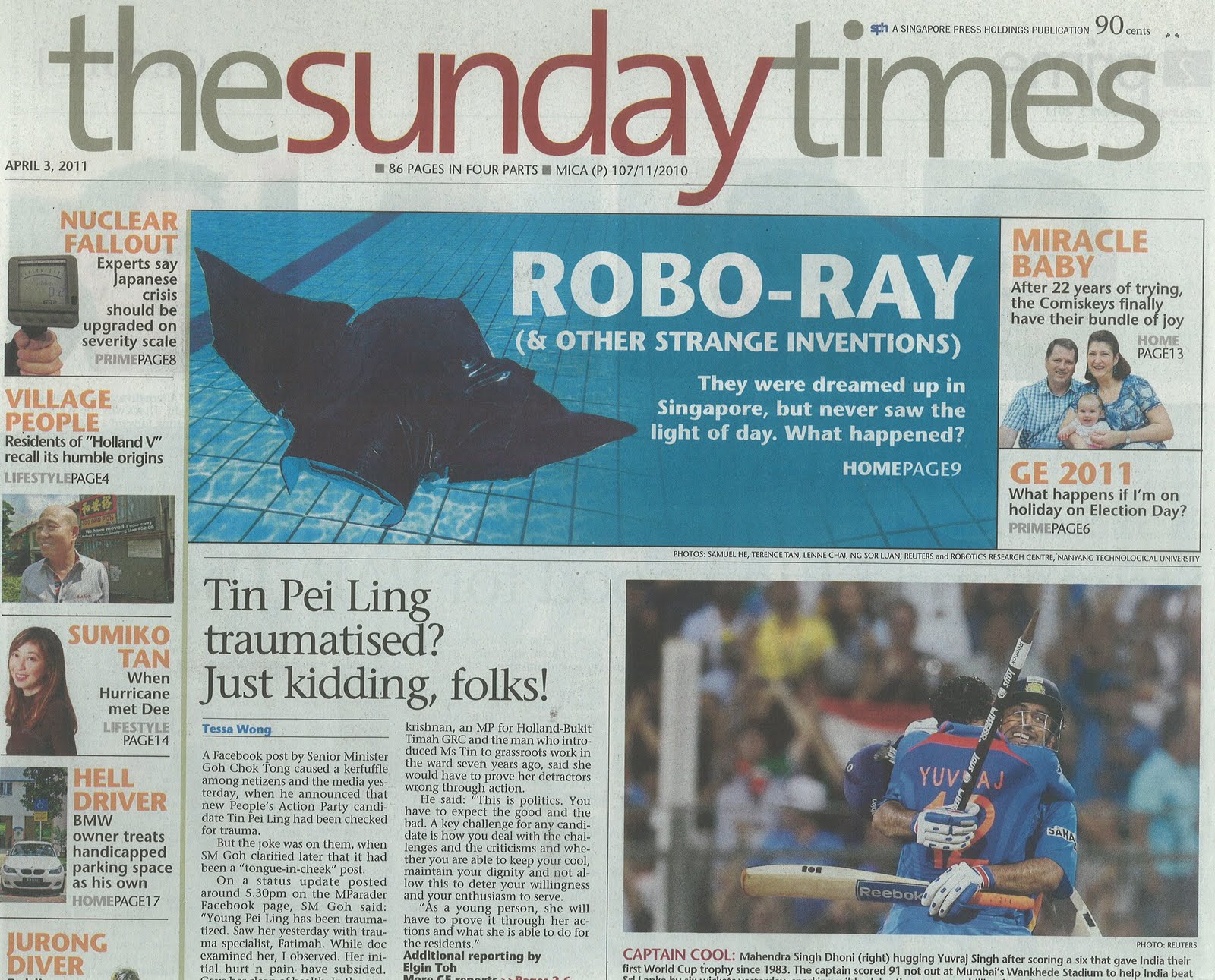
Mr Goh's off colour joke that TPL was "traumatised" sent netizens into overdrive as pro- and anti-PAP elements speculated on TPL's state of mind. Just when the party could have engaged heartlanders with real issues that bugged them, the PAP made front page news on 3 April's edition of The Sunday Times for all the wrong reasons. Column inches in a prime spot in a newspaper were wasted, repeat wasted, on TPL. The fact that TPL still needed SM Goh to defend her emphasized her ineffectiveness in reaching out to netizens and young Singaporeans, and reinforced the view that she lacked maturity.

18 April: "Servants, not masters". I like Prime Minister Lee Hsien Loong's reminder to party activists that the party is here to serve all Singaporeans.

With Confucius-like firmness, PM Lee said: "Never forget we are servants of the people, not their masters. Always maintain a sense of humility and service. Never lord it over the people we are looking after and serving. Be as strict with ourselves as we are with others, because that is the way for us to win respect and support, and for the PAP to remain the People's choice to govern Singapore."

This is good. There are not "buts" though I ask that you scroll down to the entries for 25 April.


22 April: The headline of this longish personality profile on a new PAP candidate, Mr Lawrence Wong, is unfortunate. I bet that the vast majority of readers did not read the story from start to end but simply glanced at the headline before flipping the page. Seen out of context, the headline reminded netizens why alternative voices are vital in the new Parliament. It was a free advertisement for a notion Opposition voices had been seeding among heartlanders: That PAP candidates are Yes Men.

23 April: Please read the headline of the report above. Now look at the one below (dated 1 May 2011).


The backflip is apparent. The party compromises its goody two shoes image and hurts its credibility with such antics. This is politics? Perhaps so. But do not forget you are appealing to voters to support people they can trust. After the financial fiascos at the National Kidney Foundation and Ren Ci Charity, the Opposition's strategy of harping on the security of CPF money plays on people's unvoiced or unheard fears that similar monkey business could ruin their retirement savings.

The rule of thumb for effective public communications is never to hem yourself in with words that will come back to haunt you.

25 April: It was a bad call by the PAP's Holland-Bukit Timah GRC team to turn the spotlight on a video that supposedly exposed the "gay agenda" of Opposition candidate, Dr Vincent Wijeysingha. The political schadenfreude strengthened the prevailing view that the party had grown arrogant and - more tellingly -  that such arrogance needed to be put in its place. So this was, in my opinion, an own goal.

The Holland-Bukit Timah PAP candidates showed poor understanding of social media after they let the genie out of the bottle and found they had whipped up unexpected vitriol against their party.

It was naive of Dr Vivian Balakrishnan to expect net fury to die down just because he said people should not talk about the issue anymore.

Few people would have argued with Dr VivianB if Dr VincentW's intentions were truly nefarious. But when netizens examined the net footage and compiled a transcript of the forum Dr VincentW, it emerged that it was verbal jousting with a good dose of humour that could put many stand-up comics like Kumar out of business.

The tomfoolery of the PAP's Holland-Bukit Timah team was regrettable. It was sneaky and tarred PM Lee's "servants, not masters" reminder which attempted to coax voters to understand that the party was taking pains to win the confidence of voters with a sound and logical manifesto. In retrospect, the noise and fury generated by the videogate saga drowned out PM Lee's earlier message.

Remember this: the shelf life of a media talking point is around two weeks (which is why netizens are no longer interested in the SAF maid saga. They have moved on). By opening the account just a week before Polling Day, the PAP's Holland-Bukit Timah team ensured the topic would remain hot during the campaign season. Pity.

30 April: In the last week of April, media watchers would have seen SM Goh renege his decision not to comment on Opposition outside Marine Parade and endured the videogate saga.

Along came Minister Mentor Lee Kuan Yew, who with characteristic frankness told Aljunied residents what sort of future they faced if they voted against the PAP. MM Lee said: "Well, it's their choice. And I'd say they have five years to live and repent." *ouch*

Ample views have been aired on this matter. As far as own goals go, this one nearly killed the goalkeeper.


3 May: Prime Minister Lee Hsien Loong's public apology was astute, albeit belated. It is true that it is never too late to say sorry, but a closer appreciation of ground sentiments over cost of living, foreign talent and other bread and butter issues would have allowed superior information management to swing into action.

In my opinion, the PAP does not lack early warning indicators. But the system has shown its disdain/disrespect for people who have dared to question its authority. It seems intolerant of dissent and must always have the last word. Case in point: Look at how academic Dr Bilveer Singh was severely chastised for remarking that some Singaporeans live a hand-to-mouth existence. (Even my Forum Page letter questioning SAF training safety in 2009 got me on the wrong side of MINDEF's Director Public Affairs, who took it upon himself to mete out childish punitive measures.)

The desire for political glasnost after PM Lee's mea culpa should not open the doors to shoddy research (not saying that Dr Singh's research was shoddy but he withdrew his remarks after the firestorm) nor should we kowtow to crackpot opinions and political opportunists.

We dig in, hold out ground when we need to be firm. But the Establishment must be more receptive to alternative viewpoints without the kneejerk reaction of demolishing critics and blackballing individuals by adding unkind remarks to their P-file.

Above all, it needs to weed the field of smarmy grassroots who tell their political bosses things they want to hear or volunteer to help the MIW for pecuniary interests (example: lucrative town council contracts).

4 May: The deluge of questions during PM Lee Hsien Loong's webchat demonstrated convincingly that politicial awareness is thriving in the blogosphere. But coming so late in the campaign, the webchat was political theatre - nice for headline news but in reality, contributing little to the relief valve for pent-up frustrations.

5 May: Foreign Minister George Yeo, who led the PAP's Aljunied GRC team, pledged to help transform the party and acknowledged "widespread unhappiness". To me, this was a turning point in the campaign as it showed the battle for Aljunied was over before the first vote had been cast.

It was a watershed because the MIW had been put on the defensive so close to Polling Day. With social media abuzz with chit chat over voting preferences, heartlanders (i.e. voters) were operating in as near a situation of knowing voting patterns ahead of time as one could hope for.

While Singaporeans seemed uneasy with voting the MIW out of power, making Aljunied the WP's point of main effort eased fears among voters of a freak election result, thus neutralising the MIW's freak election result messages. In simple language, greater clarity of the election battlespace allowed the Opposition to elevate Aljunied into a national issue while MIW Aljunied candidates were going on endlessly about 5 cents/10 cents municipal issues - midges, lift upgrading, covered walkways, yellow boxes for traffic junctions etc.

The Opposition was quick to jump onto these belated attempt at fence mending. The apologies by PM Lee and calls by George Yeo to transform the party worked to bolster the WP's call for alternative voices.

Too little, too late. The PAP's poor record at making room for alternative voices alarmed people with the possibility they may wake up on 8 May with no one to challenge the party.

When then-Prime Minister Goh Chok Tong called a GE in 1991 and led the PAP to its worst defeat since independence, the poor showing was blamed on Goh's folksy and consultative style of leadership. So the party swung the other way after Goh said he would be a little deaf to people's voices.

Fast forward 20 years to GE 2011. The PAP now blames its loss of six seats (plus two near misses - Joo Chiat and Potong Pasir) to its failure to listen to the people.

How ironic? This is politics.

Sunday, May 8, 2011

After the battle: Aljunied GRC

The MIW have lost the hearts and minds battle in Aljunied and a new management will soon move into town councils there.

The General Elections 2011 demonstrated convincingly that Singaporean netizens walked the talk after they aired a slew of personal, municipal and national level grouses on the Internet.

Their votes have spoken. So what's next?

Cabinet transformation
High on the agenda for the People's Action Party (PAP), which has returned to power, is the selection of a new Minister for Foreign Affairs. Few in Cabinet can match the philosophical musings (eg, comparing Singapore's destiny with the rise and fall of Venice) and appreciation of historical moments as outgoing minister George Yeo.

Singapore's Ministry of Foreign Affairs (MFA) will lose two political appointees. They are Mr George Yeo Yong-Boon and Mr Zainal Abidin Rasheed, its Senior Minister of State. Both stood as PAP candidates in Aljunied Group Representation Constituency and lost their seats to the Workers' Party (WP).

Bottomline: It is possible that PM Lee may double hat as MFA minister while the rest of the new Cabinet gets into steady state mode. Some young ministers showed an unfortunate lack of sensitivity during the hustings and this is likely to count against them, especially for the MFA slot.

Four defence and security issues that Singaporeans will have to watch closely include:
* The Points of Agreement (POA) that will lead to the land swap with Malaysia.
* The sea border negotiations with Indonesia and Malaysia. Unresolved for years, this has given Indonesian Navy warships a good excuse to wander into what Singapore deems as Singapore Territorial Waters (STW) with passive agressive challenges using high speed runs and blinding searchlights at night.
*  The Defence Cooperation Agreement (DCA) with Indonesia. The deadlock in talks is holding back closer and more meaningful defence relations with Indonesia. The Siabu Air Weapons Range in Pekan Baru is slowly but steadily deteriorating in Sumatra's harsh tropical weather and is just one casaulty of the failure to renew the DCA.
* To a lesser but no less important degree, the MFA needs a minister who can fend off pressure for Singapore to contribute Singapore Armed Forces (SAF) troops for assorted missions overseas. The United States, in particular, has been knocking on doors of its partners around the globe to lessen the burden on US forces. The unspoken line is for coalition partners to spread the load as a larger pool of international participation reduces the odds of an American ending up as a war casualty.

The outgoing Aljunied team
The PAP has never had a better opportunity to prove to the electorate that its multi-million dollar ministerial salaries are calculated because its candidates are worth it. Don't get me wrong. This is not a snarky remark.

For years, ministerial pay has been a hot topic which has been dissed by the MIW.

Singaporeans will watch closely where Mr Yeo's career path will lead to. Whatever the case, he is unlikely to require a handout or remain unemployed for long.

If he is given a job with a state-linked company as a consolation prize, this saving grace will only fuel unhappiness that minister's cannot hold their own in the private sector. By this I mean the real private sector, not privatised companies that are government-owned as it would lend credence to the view that a hidden hand helped nudge Mr Yeo into his new job.

The spotlight will also fall on the future for Mr Zainal and Mrs Lim Hwee Hua, Minister in the Prime Minister's Office and 2nd Minister for Finance and Transport.

Will HR professionals and talent scouts beat a path to these candidates with (multi-million dollar) job offers in hand? This is a delicate matter which the MIW must weigh carefully because a botched job placement plan will erode its morale high ground when debating ministerial pay.

Bottomline: I reckon Mr Yeo will be retained as a consultant to the MFA. Other government departments (OGDs) such as the Ministry of Defence (MINDEF) have done so for outstanding individuals and I expect MFA to do the same.

The future for Aljunied residents
The five-year window for Aljunied residents to repent starts today.

If the PAP is to distill lessons from the 7 May'11 GE for the top takeaway, it should be this: The playbook is outdated.

Any attempt to make Aljunied residents pay and pay for their decision at the ballot box will backfire. In the social media era, every resident has a voice and any reprisals will be magnified as residents cry foul online and offline.

While the old regime's playbook may have recommended a scorched earth policy by withdrawing and leaving hollowed out town councils, this tactic will not work today.

The change in management will test grassroots volunteers. Will they withdraw from the community they live in and therefore send a signal that their time and sweat is allied more to party colours and not a genuine desire to serve the residents? Will MIW grassroots stay in place with a passive aggressive attitude to disrupt, delay and destroy goodwill between Aljunied residents and the new town councils?

With citizen journalists on the prowl, any attempt to do so make backfire, with unintended results for the party.

This isn't a case of letting Aljunied residents have their cake and eat it. The WP team will have to shoulder the burden, voters will have to live with their decisions but the children, young adults of non-voting age and elderly must not be part of the collateral damage in the politicking.

If the WP fails to deliver, there is always another GE for people to decide.

Bottomline: No scorched earth. A proper handing/taking over should be executed. Incoming town council members should be briefed on potential trouble spots and institutional memory must be handed over. Grassroots volunteers and leaders should place community interests above party loyalty.

To leave Aljunied residents hung out to dry smears the MIW's image that they are there for the people.

This would only serve to give its critics more ammunition to blast the PAPies when the next GE comes around by 2016.

Next: After the battle: Hits and misses in GE 2011 by various political parties that engaged the mainstream and social media

Saturday, May 7, 2011

Friday, May 6, 2011

Election Watch: The day after tomorrow

The day after the General Elections should be a day of national unity, regardless of election outcome.

How you vote on Saturday will decide if the MIW or Opposition parties end up licking their wounds.

If the People’s Action Party (PAP) is returned to power, one would hope the party will accept its fresh mandate with humility and respect.

The public image that Prime Minister Lee Hsien Loong projects is one of a leader who genuinely cares for Singaporeans and works with their interests at heart.

This image is demolished whenever high handed statements that chide or belittle Singaporeans are rammed down the throats of voters. Words like “repent” and “slum” spring to mind. Older Singaporeans who have not voted for some time are not amused. They worked hard to build up Singapore during the city state's formative years and do not take well to such paternalistic talk.

Many will see the inside of a polling booth for the first time in their lives tomorrow, so one hopes today's cooling off period will allow them to think through what's at stake before marking the "X".

Add Generation Y young voters, who have that independent streak typical of today's youngsters, add grassroots members who tell their masters what they want to hear and you can well understand why the upper echelons of the PAP have been caught blindsided.

We have met MPs with poor EQ before. Just read about this sorry episode here.

Whether real or perceived, the PAP’s arrogant image could upset voters who genuinely fear the lack of Opposition voices will let the PAP run roughshod over public feelings.

This view is reinforced by words such as “repent” because the combination of arrogance and perceived demi-god status in multi racial, multi religious Singapore is a potent one. Are you surprised Singaporeans in and outside Aljunied GRC were taken aback by that call to repent? People seem sick and tired of the old punchlines and the MIW may learn the hard way tomorrow the price of scoring own goals.

We are an educated society. But many English speaking Singaporeans lack the literary flair to appreciate the nuances or subtleties of word play. Not to make too much of this matter but can you imagine how non English speaking heartlanders would react after the vernacular press translated the "repent" quote for Malay, Mandarin and Tamil newspapers? Pause for thought, please.

To defence aware Singaporeans, the amount of power the post 7 May government will wield makes it imperative that the people in power govern with a heart and a level head and a pledge to follow not just the rule of law, but the spirit of the law. Draconian laws that govern free speech, spell out what is an illegal gathering, legislation that allows detention without trial and police powers that allow the PM to quash dissent are instruments that could be abused by a rogue party.

If the PAP scoops all seats, except for Hougang, it should have the foresight to engage netizens before the next GE swings round.

With PM Lee making the effort to connect with Singaporeans, the party must walk the talk and ensure it reaches out to different and dissenting points of view if it really believes it is the best only option to shape Singapore's future.

If the MIW are serious about giving Singaporeans a voice, it should not let problems fester only to see problems bubble to the surface come election time.

Above all, Singaporeans will watch closely how the MIW behave after the polls.
* Will it settle scores with opponents and all those who dared to speak up against it?
* Will mopping up operations extend to social media that gave netizens a play by play account of the hustings (such as Yahoo News)?
* How will voters be made to repent?

The PAP must be prepared to say how it will repay the trust of voters if they take the PM's apology at face value and give him another five years to get the party transformed.

Talk is cheap. The price of your vote is priceless.

As the saying goes, people get the government they deserve.

Monday, May 2, 2011

Election Watch: A look at social media issues at half-time of the GE 2011 campaign

This time next week, Singaporeans will have elected a new government to look after their day-to-day needs and oversee Singapore's national destiny.

Results of the 7 May'11 General Elections (GE) will show if Internet chatter will indeed translate into votes won or lost. Whichever way the vote margin swings, the GE will be a watershed for social media watchers.

The day after:
Scenario 1: People's Action Party (PAP) increases its lead
If one uses comments in the blogosphere as a popularity index, one might be surprised the ruling PAP has governed Singapore for so long.

Comments on a multitude of Internet sites in the lead up to GE 2011 have been overwhelmingly anti-PAP. When all is said and done, if such animosity does not bleed the PAP's vote margin, this is likely to convince party strategists to ignore, downplay or disengage from Internet chatter in future.

It is not inconceivable that the same netizens who go crazy with anonymous flaming against the MIW end up casting a vote for the PAP. It is noteworthy that the vast majority of comments found on blogs and discussion groups are penned anonymously. Few netizens dare to fly their colours from the mast and state who they are. Why?

Perhaps Singaporeans, being champion Complain Kings and Queens, draw Dutch courage from the anonymity of the blogosphere and use it as a medium to vent and condemn, and that's it.

There are also many civil servants and voters (albeit from the older generation), who earnestly believe each vote can be tracked by authorities. This fear prompts them to vote for the ruling party, even though their heart tells them otherwise.

Should this scenario unfold, PAP strategists are likely to discredit net chatter as GE 2011 would have proven that all the huff and puff does not hurt its re-election prospects.

Scenario 2: PAP loses its lead
What would make PAP strategists really sit up and take notice is a big win for the Opposition. In my opinion, a big win could be defined as the failure to retake the Workers' Party-held Hougang Single Member Constituency (SMC) and loss of five parliament seats in Aljunied Group Representation Constituency (GRC), as well as a dip in overall vote share for the PAP.

If such a scenario pans out, social media pundits will have ample material on the Internet to dissect and analyse to get a better sense of voter sentiments and social media trends.

In particular, voting patterns of young voters from the Gen Y or Strawberry Generation will continue to fascinate PAP and Opposition strategists.

Hits and misses during the campaign period will also be looked at in after action reports drafted by all political parties - one would expect credible parties to carry this out.

The PAP already knows from net chatter the extent of voter unhappiness. It must be blind, deaf and dumb if it does not already realise the ground is not sweet in cyberspace. The loss of Aljunied GRC and failure to make inroads in opposition strongholds like Hougang would prove that unhappy voters have no qualms demonstrating their displeasure at the ballot box with an endorsement for the other team.

This could force PAP strategists to rethink how the party should engage and cultivate the young. In this regard, the PAP appears at a loss. It does not seem to know how to engage and work with young voters and the politically apathetic.

At half-time of the GE 2011 campaign season, the PAP's young opinion shaper, Ms Tin Pei Ling (Marine Parade GRC) has proven to be a non-starter in the blogosphere.

"Our own activists have to be active out there in the social media realm," Ms Tin, 27, said on 28 March 2011.

"Currently it is quite dominated by some of the netizens who are more pro-Opposition or anti-establishment from the bulk of comments that we always see.

"One (of the things) we can do is for our young activists to engage netizens on serious topics and issues to find out more of what they are concerned with and try to put forth our point of view."

Alas, Ms Tin subsequently found herself at the centre of an Internet storm.

In my opinion, Ms Tin's mistakes early in the hustings point to a poor understanding of social media. The subsequent damage control measures, which include taking certain images offline after they had gone viral, were futile and misguided. Worse is the period of silence when heavyweight PAP candidates had to step in to defend Ms Tin.

The sanitisation of Facebook comments on pages purportedly supporting PAP candidates signals the FB member is unprepared or unready for dissenting views. Such a tactic may have to be looked at should netizens put their money where their mouth is and follow through their threats on polling day.

It remains to be seen if voters will be prepared to forgive or overlook remarks by PAP leaders that have struck some Singaporeans as arrogant and out of touch with the ground. These include phrases such as "repent" (a questionable choice as it has religious undertones) and a media statement by PAP's Holland-Bukit Timah team that some people found homophobic and sneaky - traits that are inconsonant with a political party that built Singapore from nothing. A confident party need not resort to such tactics.


At half-time, the PAP has brought big picture issues such as the sandwich class, jobs, housing and cost of living back into focus. It has also acknowledged that some Singaporeans do want an alternative voice in parliament. Indeed, Senior Minister Goh Chok Tong remarked this evening that the party would see if Singaporeans "could have their cake and eat it" by voting PAP and having alternative voices to air different points of view.

Is it too late? With 20:20 hindsight, perhaps such ideas and assurance could have been floated months earlier.

Cleaning house
Apart from serious soul-searching should voters give the PAP a wake up call, one should also monitor how the party will clean house after GE 2011.

The number of government scholars and former civil servants who turned their backs on the PAP to join the Opposition is likely to be a cause for worry. Party stalwarts might wonder who's next?

If this leads to a thorough review of current civil servants and armed forces officers to weed out the politically unreliable, this will eventually populate the system with individuals who tell the party what it wants to hear. In the long run, such cherry picking would be akin to inbreeding and would lead to predictable results in future elections as the gulf between party rhetoric and public sentiments widens.

The PAP should ensure its IFF is working well so it will not cast out supporters and friendlies as it purges the system of potential turncoats. If its house cleaning is ruthless, such a purge will only swell the ranks of voters who will turn their backs on the party (some for good).

Remember that for GE 2011, the PAP still has a powerful voice within its ranks to admonish or rally voters to its cause. That voice may be absent in GE 2016 and beyond.

With a more mature Internet and growing segment of Gen Y voters, it will be hard to hold back the tide.

Please tune in this weekend for the GE 2011 scorecard.